
Push-to-Talk Radios for Security Companies in Australia
GPS patrol visibility. Duress alerting. 36-month voice recording. Lone worker check-in. All on a network your guards can actually rely on.
Security comms fails at exactly the wrong moment. You know this.
If you’ve run security operations for any length of time, you’ve dealt with at least one of these. Most operations deal with all of them.
UHF doesn’t cover the whole patrol area
Your repeater covers the main site but drops out in the car park, the back loading dock, or the far corner of a large estate. Your guard is out of contact and nobody knows it until something happens.
Dispatcher can’t see where guards are
A mobile patrol calls in an incident. You ask where they are. They have to describe it. Meanwhile, you’re trying to work out which guard is closest and whether you need to escalate. That delay costs you.
No voice recording for incident evidence
A guard reports an altercation. Two days later, a client asks for the comms record. Your UHF radio recorded nothing. Your mobile phone calls weren’t logged. The evidence trail is whatever your guard wrote in their report.
Lone worker risk with no check-in system
A guard working an overnight static post or a solo mobile patrol has no structured way to confirm they’re safe. If they don’t call in, you might not know they’re in trouble for an hour. Or longer.
Event security: no infrastructure at the venue
You win an event contract. The venue has nothing. Setting up a temporary UHF repeater is expensive, time-consuming, and unreliable. Coverage is inconsistent and you’re troubleshooting radios instead of running your operation.
CIT: no tracking visibility between stops
Your cash-in-transit crew is on route. You know their schedule. You don’t know exactly where they are unless they call in. If something happens between two stops, your response starts from a position of uncertainty.
Feature-benefit pairs. Not a brochure list.
Each of these is a direct answer to a real security operations problem. We’ll cover the technical detail on a demo — but here’s the short version.
Live GPS tracking — every device, real-time
Your Web Dispatcher shows every guard’s position on a live map. Mobile patrols, CIT crews, event teams. You see where they are, where they’ve been, and how long they’ve been stationary. No calling in. No guessing.
Lone worker check-in and duress alerting
Set automated check-in intervals for solo guards. If a guard doesn’t respond within the window, the dispatcher is alerted. If a guard triggers the duress button, you get an immediate GPS-tagged alarm. Evidence-grade comms from first contact.
36-month voice recording — Australian servers
Every PTT transmission is automatically recorded and stored for 36 months on Australian servers. Searchable by time, device, and channel. When a client questions a guard’s conduct, or an incident goes to review, you have the full audio record. Not a handwritten log. The actual conversation.
Event comms with zero setup — no repeater required
4G cellular means you deploy anywhere there’s mobile coverage. Your T60K or T65 portables arrive pre-programmed. Hand them to your team on arrival. Full group PTT, GPS, duress, and dispatcher visibility from minute one. No hire equipment, no site survey, no RF engineer.
CIT route tracking — live, not estimated
Vehicle-mounted M50K units give your dispatcher a live GPS trace of every CIT vehicle throughout the run. Not a scheduled check-in. A continuous position update. Deviation from a planned route is visible immediately. If something goes wrong, you know where, and when, and you have the audio record.
4G coverage — where your guards actually work
Our network runs over Australia’s 4G cellular infrastructure. That means wherever your guards have mobile reception, they have PTT comms. No repeater, no antenna, no RF planning. The coverage area is the entire Australian cellular footprint — not whatever your UHF repeater can reach from the roof.
Purpose-built for security operations — in the field, in the vehicle, and in the control room.
Every device was designed alongside the network — same engineering team, same system. Hardware, software, and network built as one integrated platform, not assembled from parts.
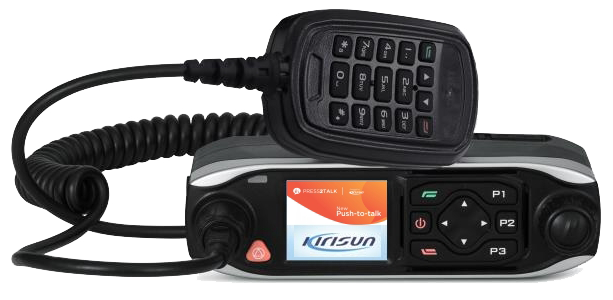
Installed in your patrol vehicles and CIT fleet. Always on, always connected. Continuous GPS tracking, duress button, voice recording. The backbone for any mobile patrol or cash-in-transit operation.
View M50K specs →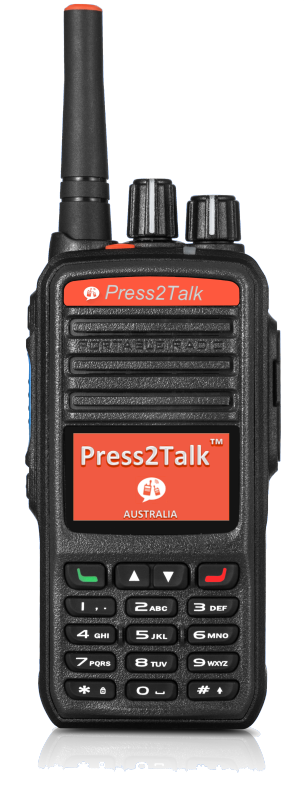
Built for guards who need a reliable handportable for static posts, site patrols, and event security. Rugged, purpose-built, and pre-programmed for your operation before it ships.
View T60K specs →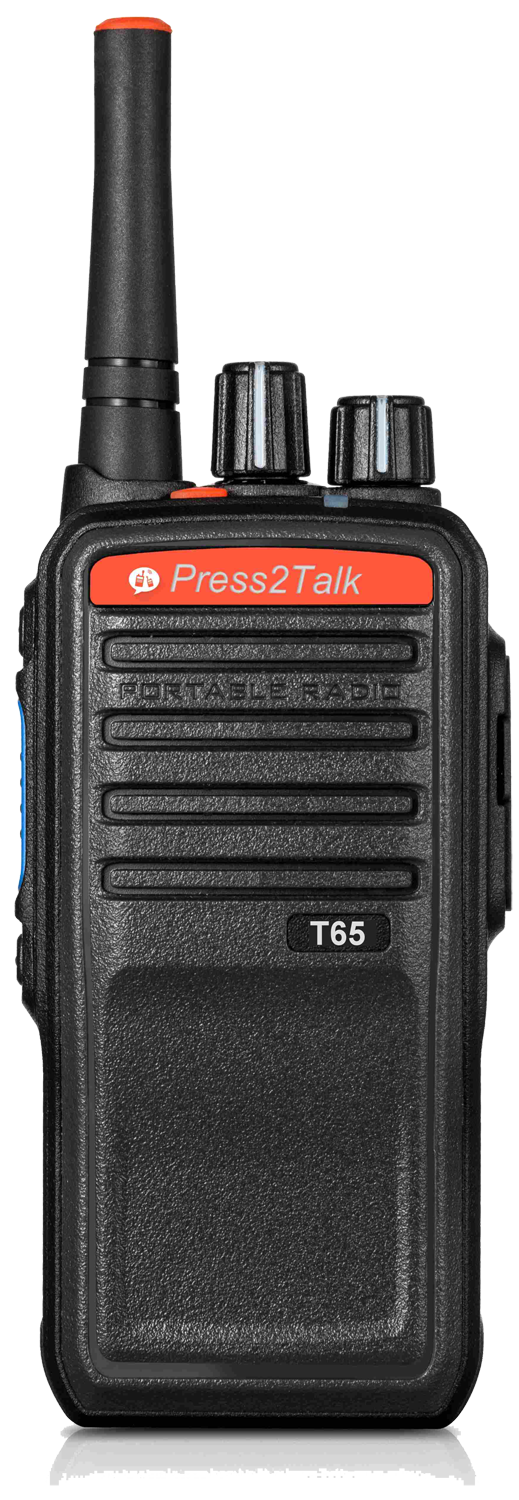
The premium handportable option. For operations where you need extra durability, extended battery, or a more capable device in hand. Still arrives pre-programmed. Still works out of the box.
View T65 specs →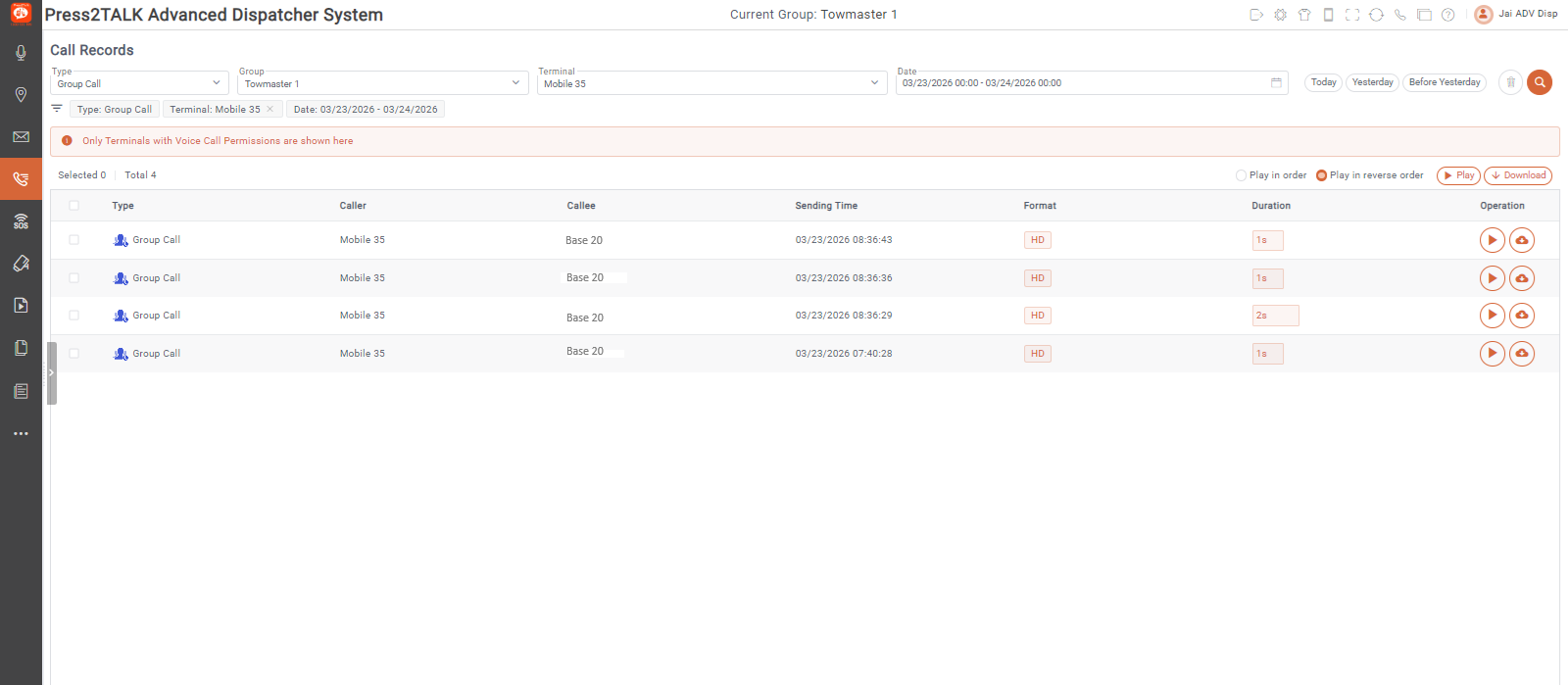
Live GPS mapping, guard location tracking, duress management, voice recording and playback, lone worker check-in, messaging, and real-time radio control — all in a browser. No software to install.
View Web Dispatcher →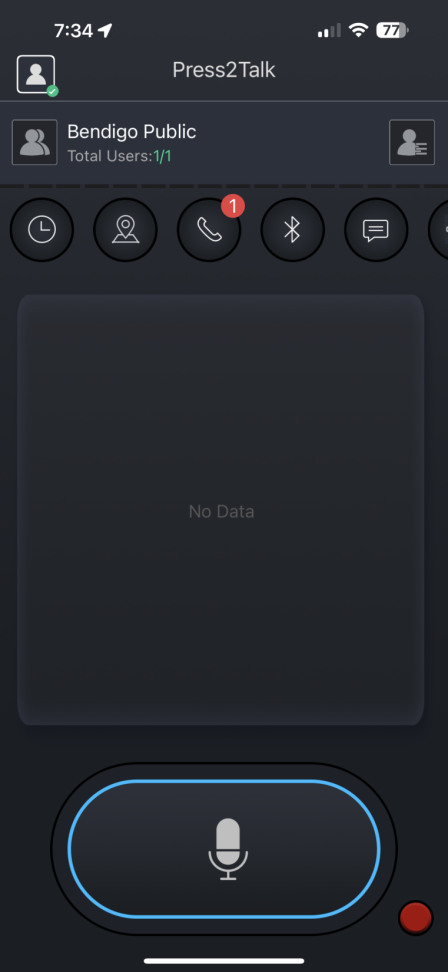
Turns any smartphone into a fully featured PTT device. For supervisors, control room staff, and any team member who doesn’t carry a dedicated radio. Same network, same channels, same voice recording.
View Smartphone App →Lone worker legislation isn’t optional. For security operations, it’s direct and specific.
Security workers are explicitly named in Safe Work Australia guidance as a high-risk lone worker category. If you employ guards working alone — overnight static posts, solo mobile patrols, CIT crews — you have a legal obligation that goes beyond best practice.
What WHS Regulation 48 requires
Under the Model Work Health and Safety Regulations (adopted in all states and territories), Regulation 48 — Remote or Isolated Work — requires that any person conducting a business or undertaking (PCBU) must provide a system of work that includes effective communication with the worker for remote or isolated work.
Isolated work, under the regulation, means work isolated from the assistance of other persons because of location, time, or the nature of the work. A security guard working an overnight static post alone qualifies. A mobile patrol working alone on a large industrial site qualifies. A CIT crew working a route without oversight qualifies.
What “effective communication” actually means
The legislation doesn’t specify the technology — it specifies the outcome. The communication system must give you the ability to reach the worker and have them reach you, from wherever they are working, at the time they are working.
A UHF radio with a repeater that covers 70% of a patrol route does not meet that standard. A mobile phone that a guard may or may not have in hand at the moment of an incident does not meet that standard.
A system that provides always-on PTT comms, GPS location, duress alerting, and automated check-in — over 4G cellular across the full patrol area — gives you a defensible position if your WHS obligations are ever questioned.
Your voice recordings are evidence. They need to stay in Australian jurisdiction.
Data sovereignty is a bigger deal for security companies than most industries. Here’s why it lands harder — and why our owned Australian infrastructure is a genuine differentiator, not a marketing point.
Voice recordings as legal evidence
When voice recordings are used in incident investigations, insurance claims, or legal proceedings, their evidentiary value is stronger when the chain of custody is clear and the data was never outside Australian jurisdiction. Our recordings are stored on Australian-owned infrastructure — not on a third-party US-based cloud service.
Government and corporate client contracts
Security companies tendering for government facility contracts, critical infrastructure protection, or large corporate clients are increasingly required to demonstrate Australian data residency. If your comms provider stores data on US cloud infrastructure, that’s a potential disqualifier. We own our servers. They don’t move.
US CLOUD Act exposure
Voice and GPS data stored on overseas cloud infrastructure — including US-based providers with Australian data centres — can be subject to foreign government access requests under laws like the US CLOUD Act. For security companies handling sensitive client site information, that exposure is real. Our infrastructure doesn’t create it.
Privacy Act and Australian Privacy Principles
Voice recordings and GPS location data are personal information under the Privacy Act 1988. Disclosing them to overseas recipients triggers APP 8 obligations. Keeping everything on Australian-owned servers eliminates that exposure entirely.
How our infrastructure is different
Most PTT providers in Australia — including the large enterprise platforms — run on rented cloud infrastructure. Azure, AWS, or equivalent. That means your data is on hardware owned and operated by a US-headquartered company, regardless of where their data centre is located.
We own our servers. Our network infrastructure is in Australia, operated by Australians, and isn’t subject to overseas corporate governance structures. We can tell you exactly where your data is, who can access it, and what Australian law governs it.
For security companies, that’s not a nice-to-have. It’s a due diligence requirement that clients and insurers are starting to ask about.
Read more about our network →Any PTT provider will say they cover Australia. Here’s what actually makes us different.
We own the network — we don’t rent it
Our servers are ours. Not Azure, not AWS. We own the hardware, we run the system, and that’s why we can guarantee 100% uptime and guarantee your data never leaves Australia. Those aren’t policy statements — they’re technical facts about how we built the system.
Hardware and network built by the same team
Our devices were designed by the same engineers who built the network. They’re not generic PoC handsets with someone else’s SIM inside. Fully integrated, purpose-built, exclusive to Australia. That integration is why they just work.
36 months of voice recording — not 12
Most PTT platforms retain voice recordings for as little as 30 days, if at all. We keep 36 months on Australian servers. For security operations where an incident can take years to reach a legal proceeding, that retention window matters.
Arrives pre-programmed. Every device, every time.
Your order leaves us with your operation already configured. Channel names, guard names, dispatcher access, talkgroups. Plug it in and it works. We’ve had operations up and running in under an hour. The setup complexity stays on our side.
Exclusive Australian importer
We’re the only company in Australia selling this hardware. Every device carries the legally required RCM mark. No grey-market devices, no compliance risk, no void warranty. If something needs support, you call us — not an overseas distributor.
We check coverage before you commit
We’ll map your patrol areas and key sites against network coverage before you sign anything. If there’s a problem, we’ll tell you upfront. We don’t take money we haven’t earned. Book a demo and we’ll run through your operation specifically.
Run it on your operation. Zero risk.
We’ll send a fully configured device to your team. Run it for 14 days across your actual operation — mobile patrols, static posts, or whatever you’re working on. If it doesn’t work for you, send it back. No invoice. No pressure.
14-day free trial · No credit card required · Australian support · Arrives pre-programmed
Call us: 1300 135 199