Community Transport
Push-to-Talk for Community Transport.
Installed. Visible. Audit-Ready.
The complete communications system for community transport fleets — installed in your vehicles by a P2T Dealer, managed from your office, and built for operations where driver visibility, client safety, and compliance records matter every day. Push to Talk for Community Transport.
Or call us: 1300 135 199 Call 1300 135 199
The real-world problem
What your current comms system can’t do
When a driver goes quiet mid-run with a vulnerable client on board, you ring their mobile — and hope they pick up. That’s not a system. Mobile phones give you no live view of the fleet. They go to voicemail. They drop out in lifts, basements, and regional patches. And they leave no record of anything that was said, which matters the moment a client or their family raises a concern.
UHF radio covers the carpark, maybe the nearby suburb — but it has dead zones that put lone workers out of contact at exactly the wrong moment. WhatsApp group chats are unrecorded, unauditable, and dependent on drivers managing a phone while operating an accessible vehicle. Consumer PTT apps push updates that break in the field, creating tech-support overhead that no transport coordinator has time for.
P2T solves all of these — and it arrives already set up. The M50K is fitted to each vehicle by a P2T Dealer, programmed with your fleet names and channels before the radio ever reaches your operation. Your drivers press one button. Your coordinator watches the whole fleet from a browser window. If something goes wrong, the record already exists.
Why P2T for community transport
Five reasons operators choose P2T
Every feature listed here answers a question your transport coordinator will recognise: what happens when a driver goes quiet on a run and can’t be reached?
Professionally installed.
Nothing to configure.
The M50K is vehicle-mounted and installed by a P2T Dealer — programmed with your fleet names, channels, and settings before it leaves the workshop. Your coordinator doesn’t touch a setting. Your drivers press one button to talk. The entire setup is done before the radio is handed over, and P2T’s Australian support team is available, if anything needs adjusting.
Live fleet visibility
from the office.
The Web Dispatcher gives your coordinator a real-time map of every vehicle in the fleet. When a run is in progress, they can see exactly where each driver is and when they last transmitted. If a vehicle goes quiet, there’s no guesswork — just a map with a timestamp. For coordinators managing multiple simultaneous runs to hospitals, medical appointments, and community activities, this is the difference between controlled and reactive.
Lone worker and duress —
built into every vehicle.
Every M50K has GPS tracking and a duress button. The Web Dispatcher can monitor any driver as a lone worker, flagging missed check-ins automatically. Drivers don’t have to initiate anything — the monitoring happens in the background. For NDIS and aged care operators with WHS obligations around workers who work alone, this is the practical answer to a requirement they already have.
Every call recorded.
No manual logging required.
Every transmission is automatically recorded with a timestamp and stored for 36 months on P2T’s Australian server hardware. If a client complaint or incident review needs a communications record — who confirmed a pickup, what was said when a driver reported a problem — it exists. Searchable, playable, exportable. No one has to remember to log anything.
Flat monthly fee.
Easy to budget, easy to justify.
Community transport operates on government funding, and every operational expense needs to be justifiable. P2T charges a flat monthly network access fee — no per-call charges, no usage-based billing, no surprises at the end of the month. The same amount, every month, regardless of how much the fleet talks. That’s easy to put in front of a funding body.
The P2T community transport deployment
How a typical community transport fleet is set up
Four products. One network. Everything talks to everything — and your drivers don’t configure a thing.
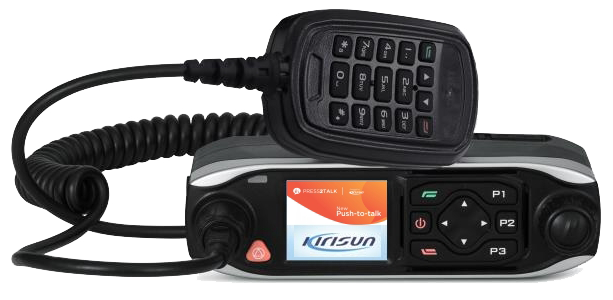
M50K Vehicle Radio
The primary radio for every community transport vehicle — professionally installed in the van by a P2T Dealer. Arrives programmed with your fleet names and channels. Drivers press one button to talk. The keypad mic means individual calls direct from the keypad. GPS, duress button, HD voice, and call recording are all built in — 12/24V DC, so it works in any van or accessible bus.
Nothing for the driver to set up. Nothing for the coordinator to configure. The Dealer does that before handover.
M50K details →Web Dispatcher
The Web Dispatcher is where your coordinator manages the whole fleet from the office — a live map showing every vehicle, updated in real time. When a run is in progress, the Dispatcher shows exactly where each driver is and when they last transmitted. Missed check-ins trigger automatic alerts. Voice recording playback with timestamps means the record is always there when you need it.
Browser-based — no software to install, always up to date. 36-month GPS breadcrumb history. Job ticketing for run management. This is the view your coordinator needs.
Web Dispatcher details →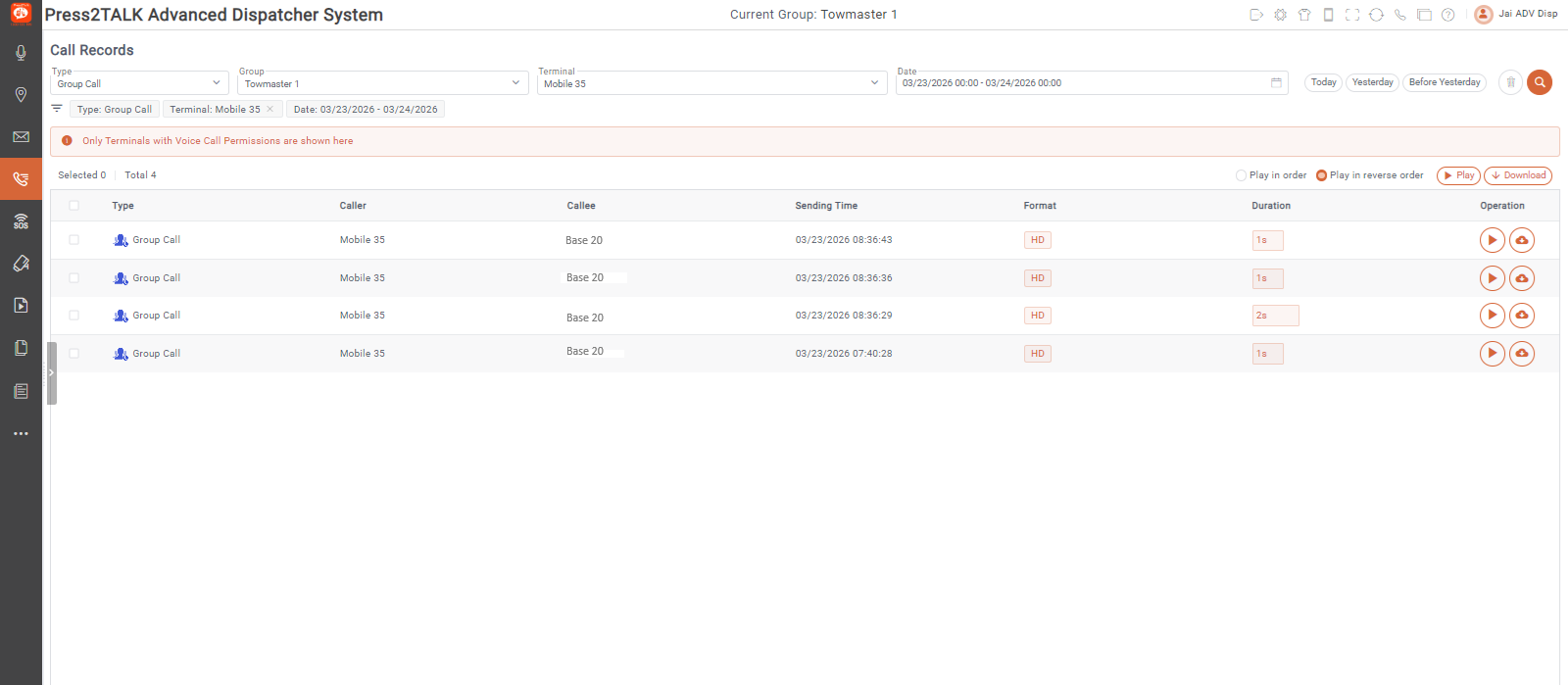
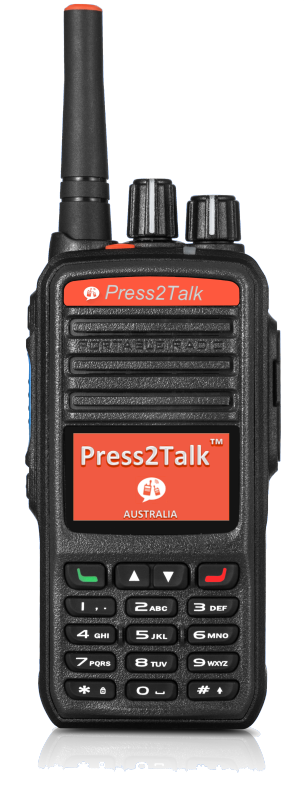
T60K Handportable
For support workers and staff who move between vehicle and building — accompanying clients into medical appointments, working at a depot or community hub. Screen and keypad, 15-hour battery, GPS and duress. Connects to exactly the same network as the vehicle-mounted M50K units, so the coordinator has a single view of everyone.
T60K details →Smartphone App
For transport managers, on-call coordinators, and management who need fleet visibility without carrying a dedicated device. Same P2T network, same channels, same recordings. Android and iOS. BYOD — no extra hardware needed. Supervisors can monitor the fleet, hear transmissions, and communicate with any vehicle or support worker, from anywhere.
App details →Safety & duty of care
If your fleet has duty-of-care obligations, here’s what P2T delivers
NDIS providers and aged care operators carry real obligations around worker safety and incident documentation. This isn’t a checklist — it’s what P2T does in practice, built into the standard deployment, requiring no additional action from your team.
Lone worker protection and WHS compliance
Every community transport driver is effectively a lone worker for most of their shift — out of the depot, with a vulnerable client, in a vehicle. State WHS regulators, including SafeWork NSW, identify check-in systems and duress alarms as reasonable risk control measures for workers who work alone.
The M50K’s duress button and the Web Dispatcher’s Lone Worker monitoring deliver both — already installed in the vehicle, requiring no additional action from the driver. Missed check-ins are flagged automatically. Duress activations show up immediately on the Dispatcher map.
Incident records — already there when you need them
The NDIS Code of Conduct requires providers to have documented systems for incident management and to promptly raise and act on concerns affecting quality and safety. When an incident review requires a communications record — who said what, when, which driver confirmed the pickup — that record needs to exist.
P2T’s automatic call recording with 36-month retention means the communications record already exists. Every transmission is timestamped and stored on Australian server hardware. Searchable, playable, exportable. No manual logging. No reconstruction from memory.
Client safety — know immediately when something goes wrong
When a driver encounters a problem on a run — a vehicle issue, a client incident, an unexpected delay — the coordinator needs to know immediately and needs to know where the vehicle is. Without real-time GPS and instant communication, small problems escalate before anyone in the office knows there’s an issue.
With P2T, real-time GPS in the Dispatcher and instant two-way radio in the vehicle mean problems surface early. The driver presses one button. The coordinator sees the location, hears the transmission, and can act — before the situation with the client gets worse.
Ready to connect your fleet?
Keep your community fleet connected —
and your records ready.
Tell us about your fleet, the runs you operate, and what you’re using now. We’ll show you how P2T fits — and connect you with a local Dealer for installation and ongoing support. Try it free for 14 days before you commit to anything.
We respond to all enquiries within one business day.
Or call 1300 135 199 Call 1300 135 199