Press2TALK for Building Management.
No Repeaters. No Dead Zones.
The no-infrastructure alternative to ageing UHF repeater systems. Purpose-built PTT hardware that runs on cellular — so your team can talk in basements, lift wells, and underground car parks without an RF survey, a licensed installer, or an ongoing maintenance contract. Australian-owned servers, Australian support.
No credit card required · No commitment · Australian support included
The Problem
Your maintenance crew goes dark in the basement. Every Tuesday.
Most commercial buildings were fitted with UHF repeater systems years ago. They worked well enough then. But ageing repeater hardware has blind spots — and those blind spots tend to be exactly where your maintenance crew is working: underground car parks, lift wells, plant rooms, stairwells, and sub-level service areas. Fixing those dead zones traditionally means an RF survey, a licensed installer, new hardware, and an ongoing maintenance contract. That’s a significant capital and time commitment for a coverage problem that often gets put in the “too hard” basket.
Consumer walkie-talkies don’t have the range or the oversight. WhatsApp and mobile calls keep teams connected enough day-to-day, but they leave no audit trail and create real compliance gaps when something goes wrong. If a contractor goes quiet in a basement plant room after hours, who knows? And how do you prove your team responded?
Press2TALK runs on 4GX, 4G, 3G and WiFi augmentation — not a proprietary repeater network you have to install and maintain. Anywhere there’s a cellular signal or WiFi, your team can talk. One browser-based dashboard shows you exactly where everyone is. And all calls are recorded, timestamped, and stored for 36 months on Australian servers. Push to talk building management Australia
Why Press2TALK
Five reasons building management teams switch to P2T
Not a feature list. Each reason answers one question: what does this actually mean for the facilities manager who’s been meaning to fix the radio problem for six months?
No repeater infrastructure. No RF survey. No ongoing maintenance.
P2T runs on 4GX, 4G, 3G and WiFi augmentation — the cellular network that’s already in and around your building. No RF survey. No licensed installer. No repeater hardware in your lift wells or plant rooms. If there’s a mobile signal or WiFi anywhere in the building, your team can talk there. The coverage you were going to spend money fixing? It’s already there.
One screen shows you the whole building — or the whole portfolio.
The Web Dispatcher is a browser-based dashboard that shows you a live map of where every team member is, right now. No phone calls to find out who’s where. No waiting to see if maintenance has finished in Level B2. Supervisors get oversight across the whole site — or across multiple buildings — from one tab. No install. No IT department.
Field hardware for your crew. Smartphone App for everyone else.
Building management teams are not one size. The maintenance crew needs a proper field device — rugged, with GPS and a duress button. The site manager doesn’t want to carry a radio. The contractor rotating through every two weeks doesn’t want to be handed one. P2T handles all three on the same network: T60K or T65 handportables for operational staff, the Smartphone App for supervisors and contractors who bring their own device. Everyone on the same talkgroup. One network access fee.
Arrives ready to go. No IT department required.
Every P2T device ships already programmed, already labelled, with your talkgroups already configured. Your maintenance crew, security staff, and concierge desk don’t need an IT person, a technician visit, or a software setup session. You take it out of the box, hand it out, and press the button. That’s the entire process. If you need talkgroups changed or a device reassigned, we handle it remotely — no site visit, no downtime.
Your data stays in Australia. That’s not a policy — that’s how it’s built.
Voice recordings, GPS data, and operational logs are stored on Australian-owned servers, managed by Australian engineers in your timezone. For buildings operated under government contracts, listed companies, or strata management structures with data governance requirements, this matters. Press2TALK’s Australian data sovereignty is an absolute technical guarantee — your data does not travel offshore. Ever.
The Hardware & Software
What a typical building deployment looks like
Most buildings use a mix of hardware and app. Here’s what each piece does and who it’s for.
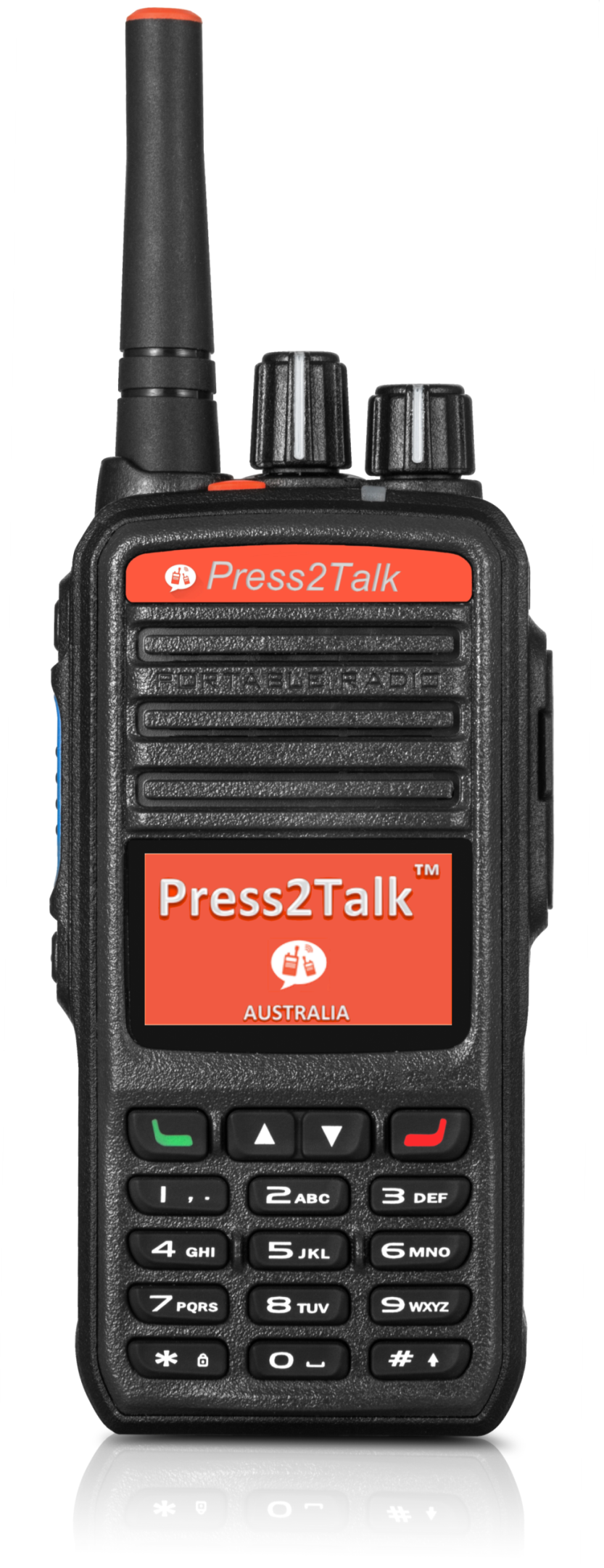
Maintenance & Security Staff
T60K
The mid-tier handportable with a full screen and keypad for staff who need individual dialling capability — maintenance crews, security patrol, concierge. 15-hour battery. Built-in GPS. Duress/SOS button. Australia-wide coverage. Arrives pre-programmed with your talkgroups.
View T60K →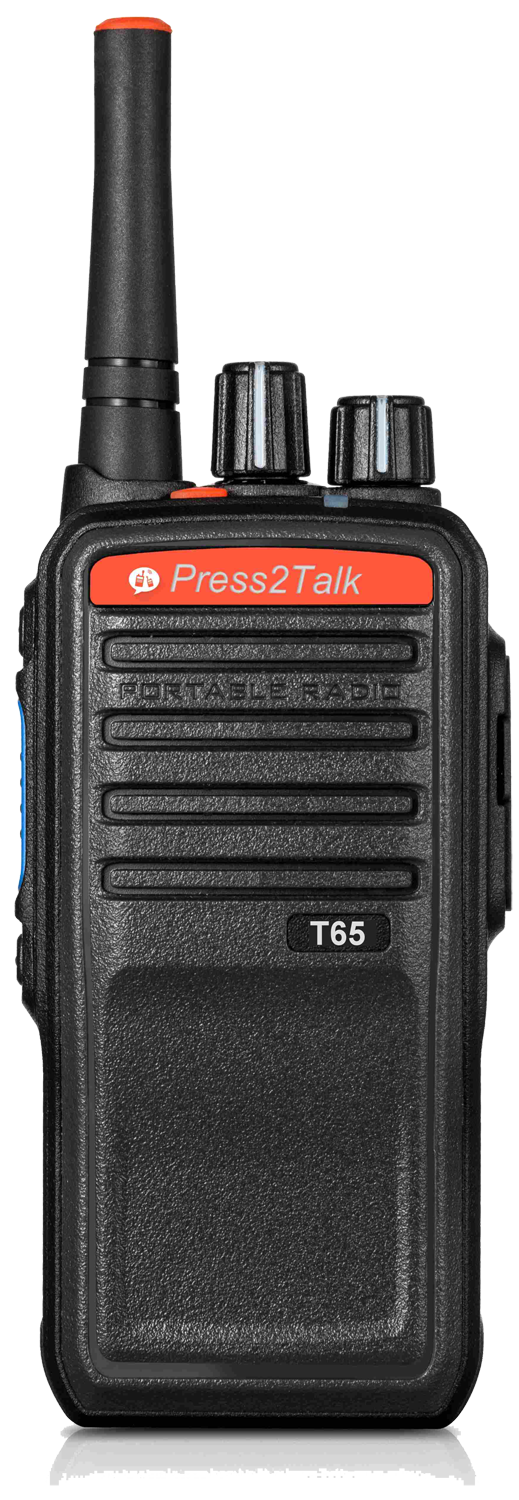
Cleaning Crews & Basic Maintenance
T65
Same coverage as the T60K, no screen, no keypad. For roles where a simple PTT button is all you need — cleaning crews and any staff where individual dialling isn’t part of the job. GPS and duress built in. Lower cost per unit for larger operational teams.
View T65 →Supervisors, Site Managers & Contractors
Smartphone App
Turns any Android or iOS phone into a P2T radio. Supervisors, property managers, and rotating contractors join the same talkgroups as the field hardware — no extra device required. BYOD. Ideal for anyone who already carries a phone and doesn’t want a second device.
View Smartphone App →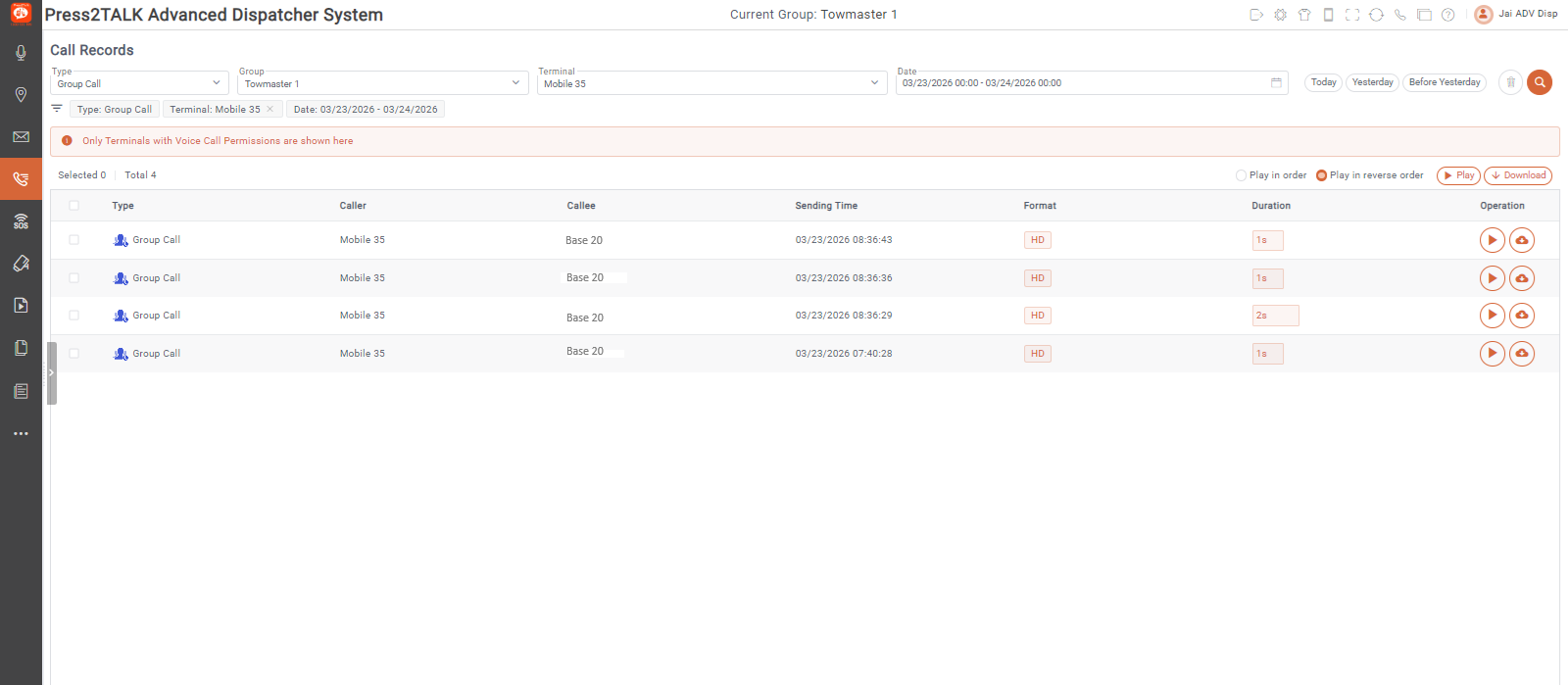
Site Manager Oversight
Web Dispatcher
Browser-based — no install. A live map showing every team member’s location, lone worker timers, duress/SOS alerts, voice recording playback, and job ticketing. One screen replaces the coordination overhead of calling around to find out who’s where. Sold separately — designed to make the whole system complete.
View Web Dispatcher →Safety & Lone Worker
After-hours maintenance. Basement plant rooms. Security patrol at 2am.
Under Australian WHS law, any worker operating without direct supervision — including maintenance staff in a basement plant room after hours, after-hours cleaners, and security patrol in a large building — is considered a lone worker. Your employer duty of care applies regardless of whether it’s a night shift or a Tuesday afternoon job in an isolated area.
P2T gives you the tools to meet that obligation without bolting on a separate safety system. It’s built into the same network your team already uses to communicate.
Lone Worker Timer
Configurable check-in timer via Web Dispatcher. If a maintenance worker doing an after-hours job in a plant room doesn’t check in within the set window, the dispatcher is alerted immediately. No hardware modification. No extra device. Works on any P2T radio or the Smartphone App.
Duress / SOS
One-button duress alert with live GPS location. Available on the T60K, T65, and Smartphone App. When triggered, the dispatcher receives an immediate alert. No guesswork. No delay.
Voice Recording & Audit Trail
Every PTT call is recorded with a timestamp and stored for 36 months on Australian servers. For contractor accountability, dispute resolution, and WHS incident investigations, this is the record you need. It exists automatically — no action required from your team.
WHS Regulation 48 — Remote & Isolated Work
Australia’s WHS Act 2011 (Regulation 48) requires PCBUs to provide an effective communication system for any worker who is isolated from assistance due to their location, time, or the nature of their work. After-hours maintenance staff and security patrol meet this definition.
P2T’s lone worker timer, GPS tracking, duress alerts, and voice recording give you a documented, auditable safety system that directly addresses this obligation — without a separate platform.
Talk to us about lone worker setup →Get Started
Connect your building team today.
Tell us how many staff are on your site, which areas they cover, and what you’re using now. We’ll show you exactly how P2T fits — and you can try it free for 14 days before you commit to anything.
We respond to all enquiries within one business day.
Or call us: 1300 135 1991300 135 199